The Second Search Split (aka Anyone Remember CPM Pricing?)

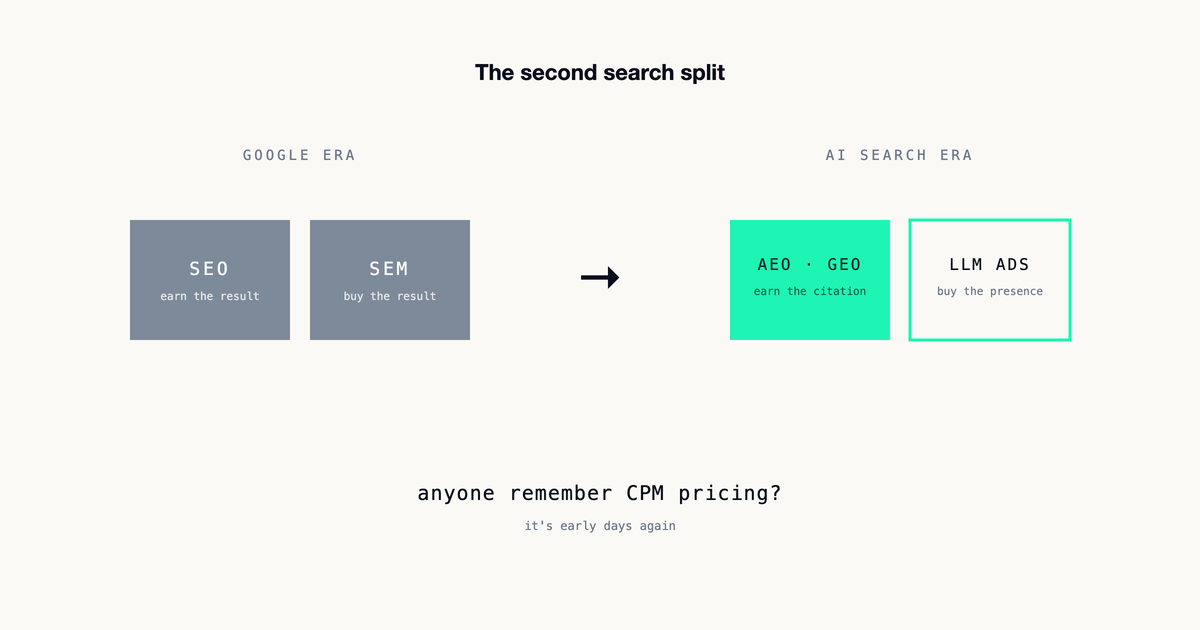
Twenty years ago, search marketing organized itself into two disciplines: SEO for the results you earn, SEM for the results you buy. Teams, budgets, careers, and agency org charts all formed around that split. It’s easy to forget that it wasn’t a strategy anyone chose — it was an organizational response to how one company monetized a text box.
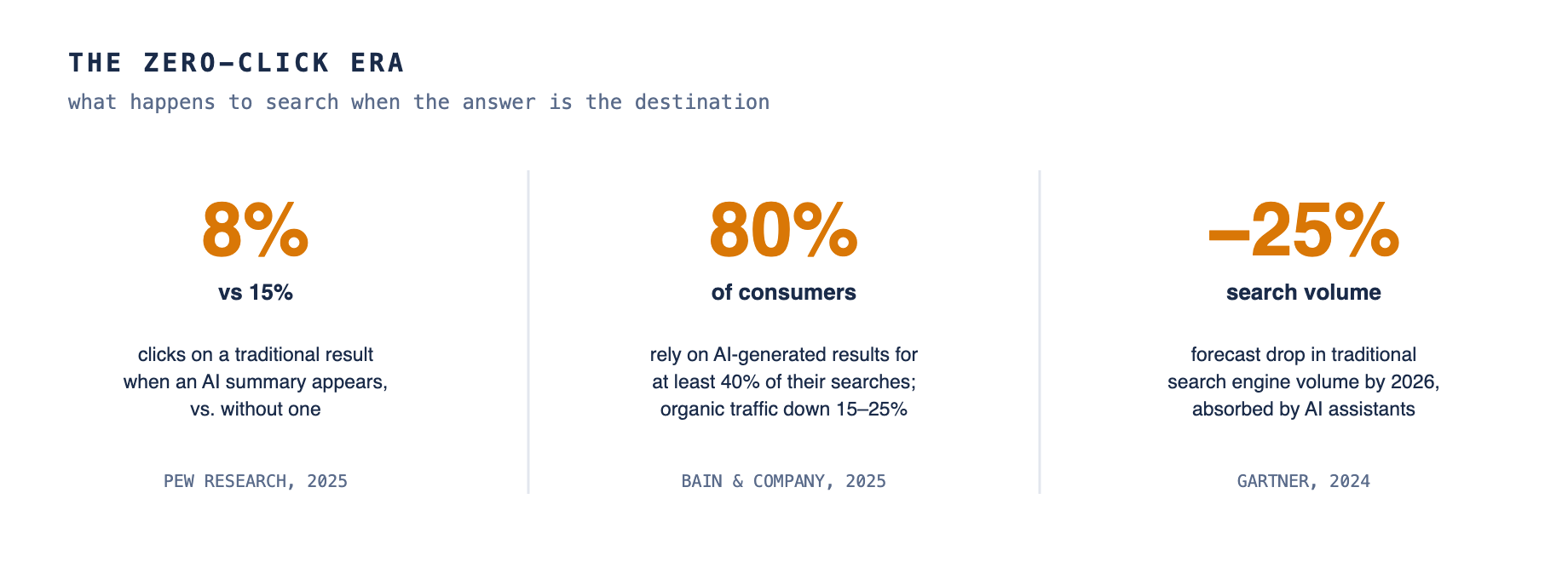
The same split is re-forming right now, inside AI search. And it’s a bigger deal than the coverage suggests. Pew found that when an AI summary appears, people click a traditional result 8% of the time, versus 15% without one — and roughly a quarter of them end their session right there. Bain puts it more bluntly: 80% of consumers now rely on AI-generated results for at least 40% of their searches, and organic traffic is down 15–25% across many sectors. Gartner expects traditional search volume to fall 25% by 2026. The traffic lost to zero-click is real — our internal data confirms it.
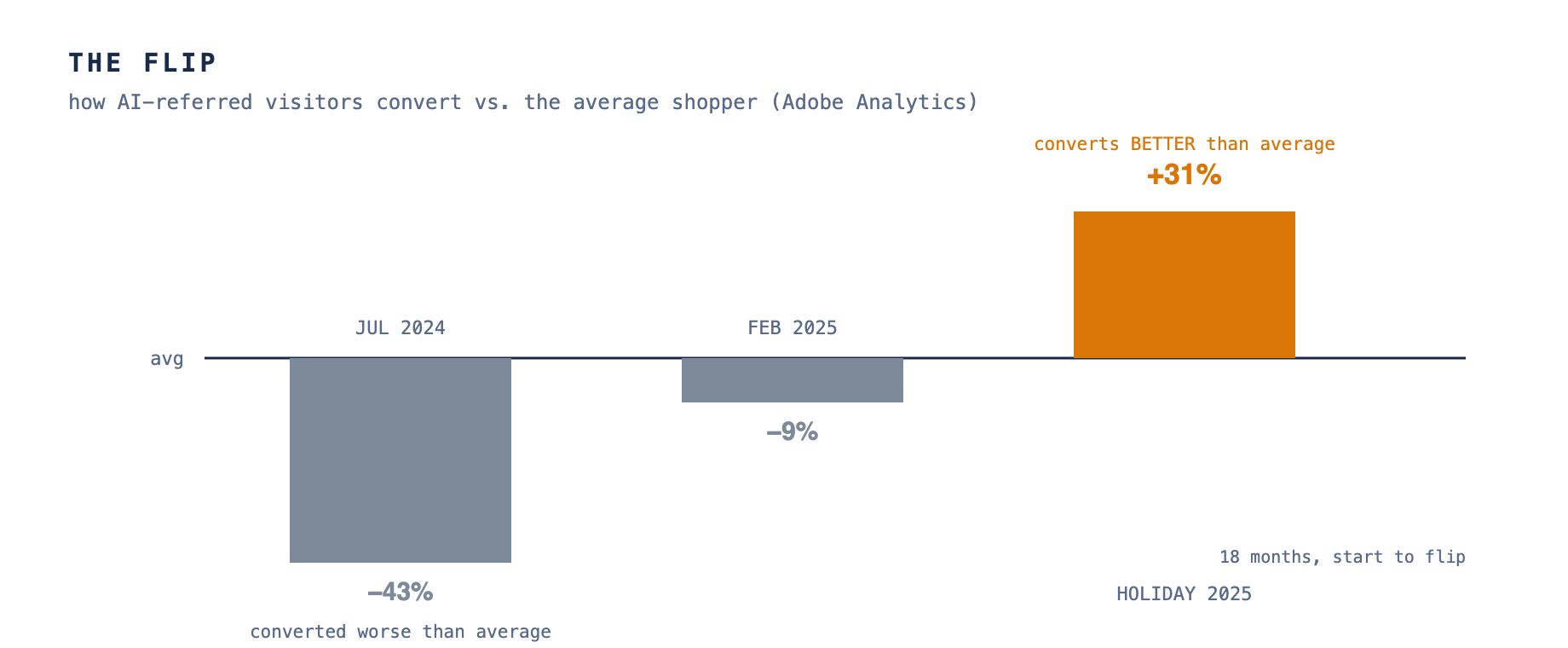
Meanwhile the AI channel itself is compounding. Adobe has tracked traffic from AI sources since mid-2024: up 1,200% to US retail sites by early 2025, and still accelerating through this past holiday season. The quality flipped even faster than the volume grew: in mid-2024, an AI-referred visitor was 43% less likely to convert than average. By this past holiday season, they converted 31% better. Everyone is still figuring out how these models choose what to cite, because all of it is genuinely new — which means right now, the learning itself is an edge, and the operators who are in early are compounding it.
The organic half of the new split already has names: AEO, GEO — earning your brand a place in the answers ChatGPT, Gemini, and AI Overviews give. The demand is real. Some of the highest-intent inbound we see at Stellar today is AEO/GEO work. And Pixis built Visibility because clients keep discovering they can’t see any of this: where their brand shows up in AI answers, where a competitor owns the citation, where they’ve vanished from consideration without anyone noticing.
The paid half barely has a name yet. Call it LLM ads: buying presence in the answer, the way SEM bought presence on the results page. The engines will monetize — that isn’t a prediction, it’s a business model with gravity. But an answer is not a results page. There’s no position two.
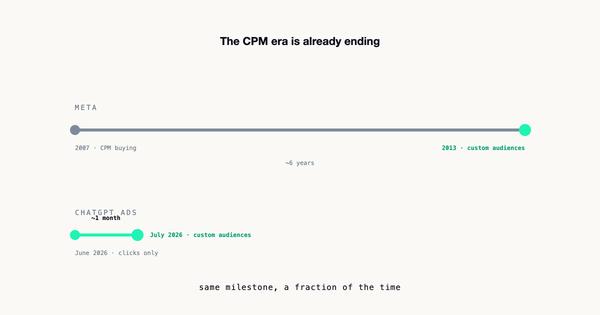
Our teams at Algofy and Realtime — who are way smarter than me on this — keep describing the same feeling: it’s Meta in the early days, standing up an ads platform. Anyone remember CPM pricing? Crude inventory, crude targeting, pricing the maturing auction would later embarrass — and outsized returns for the operators who showed up before the sophistication did. That arc, CPM to auctions to optimization to the algorithm doing the buying, took Meta the better part of a decade. It’s perfectly reasonable to think this one takes 10% of that time, or less.
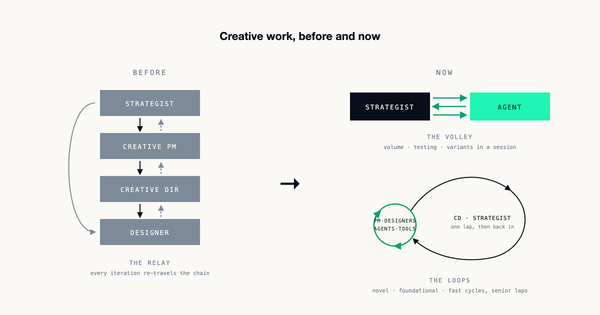
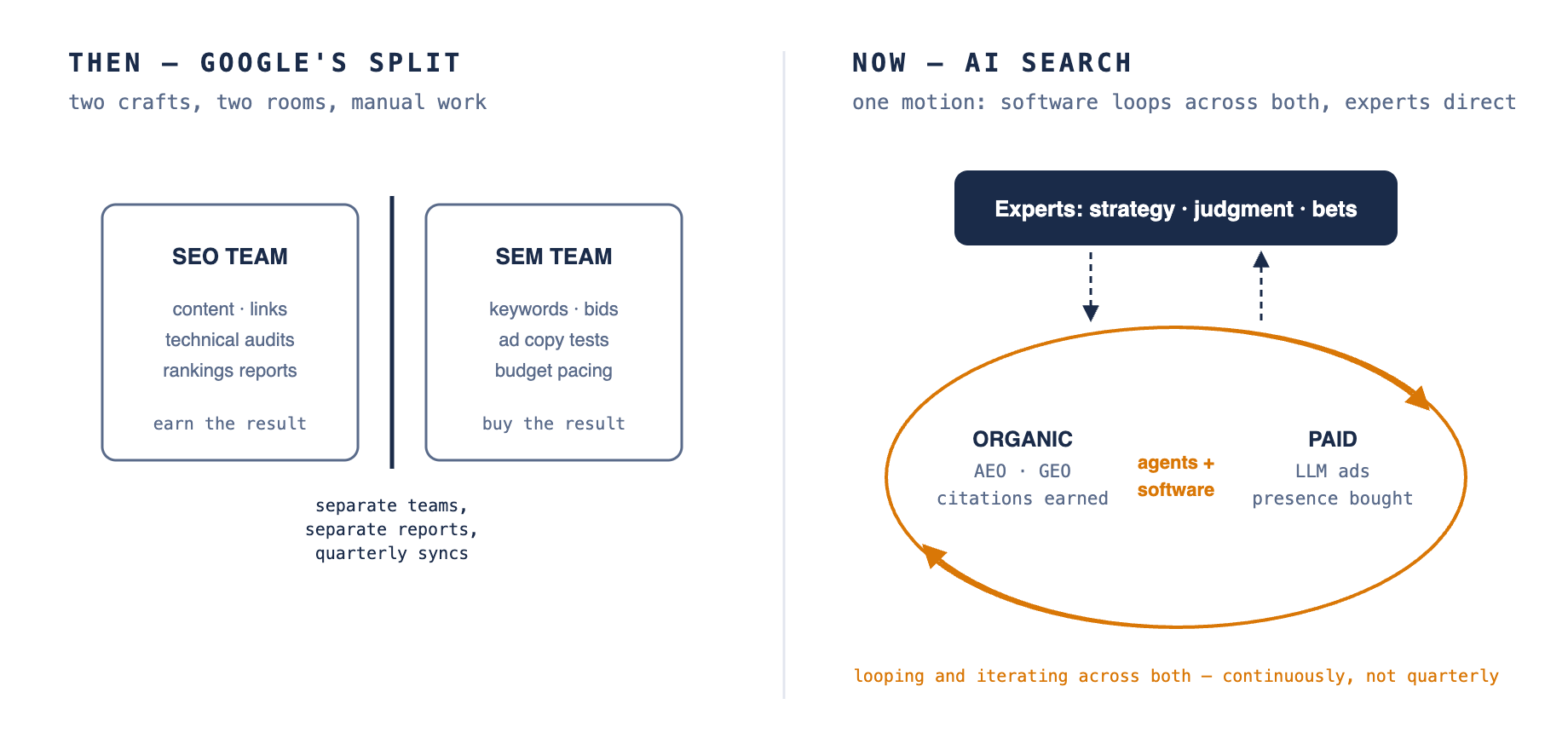
Which changes the org question. Twenty years ago, organic and paid earned separate teams because the work was manual and the platforms were separate crafts. This time, much of the work on both sides is software — agentic, looping, iterating. Systems that talk to each other can run paid and organic as one motion, in a way two teams in two rooms never could twenty years ago. Keeping them separate means giving up that compounding.
At Pixis, we have both software and teams across paid and organic AI search — and we’re already in the CPM era on OpenAI. It feels like the early days on Meta again. Which is exciting for those of us who were there — and even for those without the gray hair who weren’t.